

In a significant trade enforcement action, U.S. Customs and Border Protection (CBP) has issued a Withhold Release Order (WRO) targeting copper and copper products manufactured by Serbia Zijin Copper D.O.O. The order, effective immediately, stops these products from entering U.S. ports, citing evidence of forced labor in the company’s production processes.
The Regulatory Basis
The WRO is grounded in 19 U.S.C. § 1307, a federal statute that mandates the detention of goods produced, in whole or in part, through forced labor.
The Evidence Against Serbia Zijin
CBP’s investigation concluded that there is “reasonable suspicion” that operations at the Serbia Zijin facility violate international labor standards. According to the agency, their findings were based on a wide array of evidence, including worker statements, photographs, field notes, and academic research.
The agency highlighted six specific International Labour Organization (ILO) indicators of forced labor identified at the facility: abuse of vulnerability, withholding of wages, intimidation and threats, restriction of movement, retention of identity documents, and excessive overtime.
Importers now face a narrow path forward: they must either export or destroy their detained shipments, or provide sufficient evidence to CBP proving that the goods were not produced under forced labor conditions.
Company Response
Serbia Zijin Copper D.O.O. has publicly acknowledged the CBP decision, emphasizing that it takes the matter “seriously.” In a statement, the company affirmed its opposition to all forms of forced labor and stated it remains committed to complying with both applicable laws and international human rights standards.
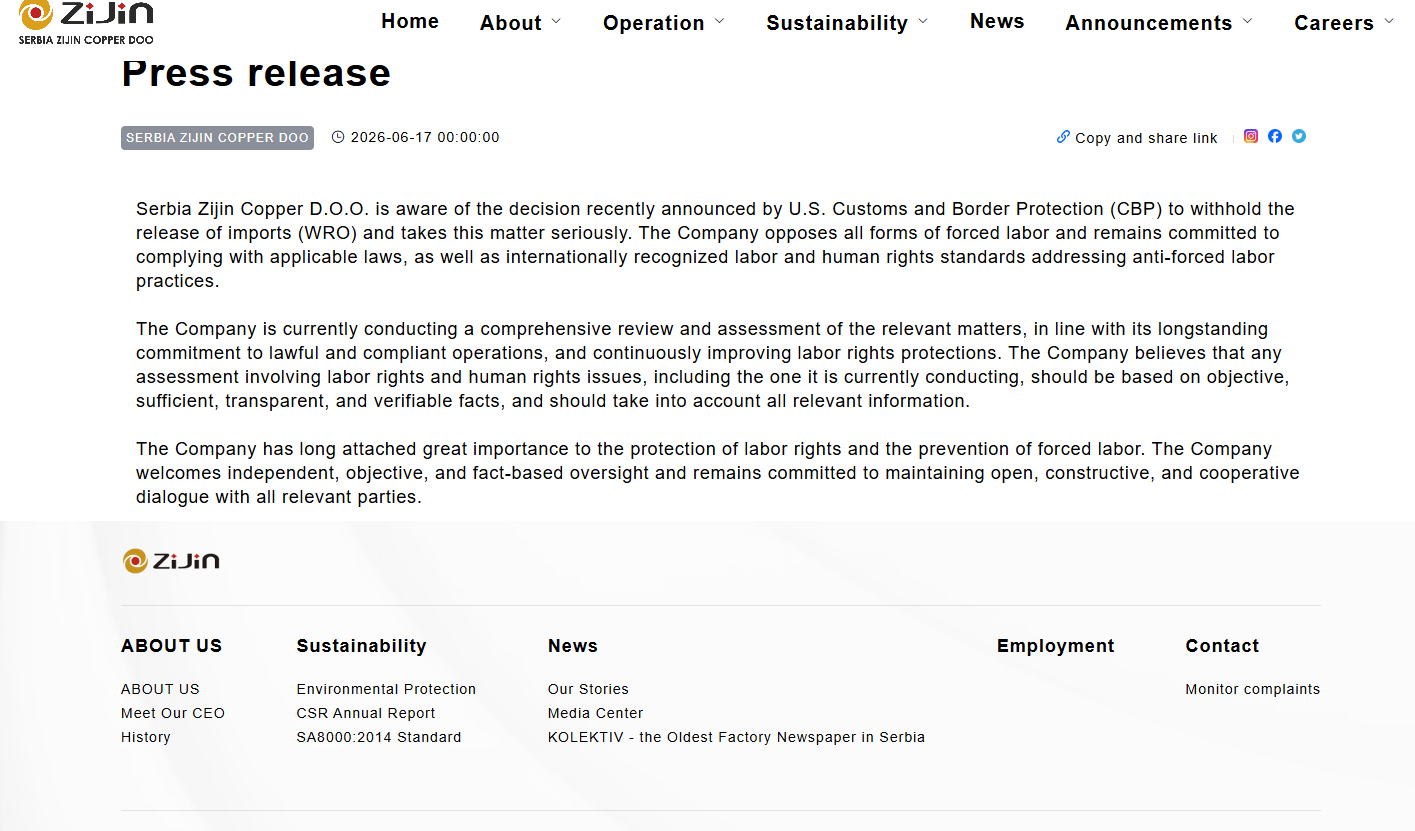
The company is currently undertaking an internal review, noting that any assessment of labor rights should be based on “objective, sufficient, transparent, and verifiable facts.” They have expressed a willingness to engage in open dialogue and cooperate with independent, fact-based oversight.
This remains a developing situation as importers and the company navigate the impact of this trade enforcement action.