

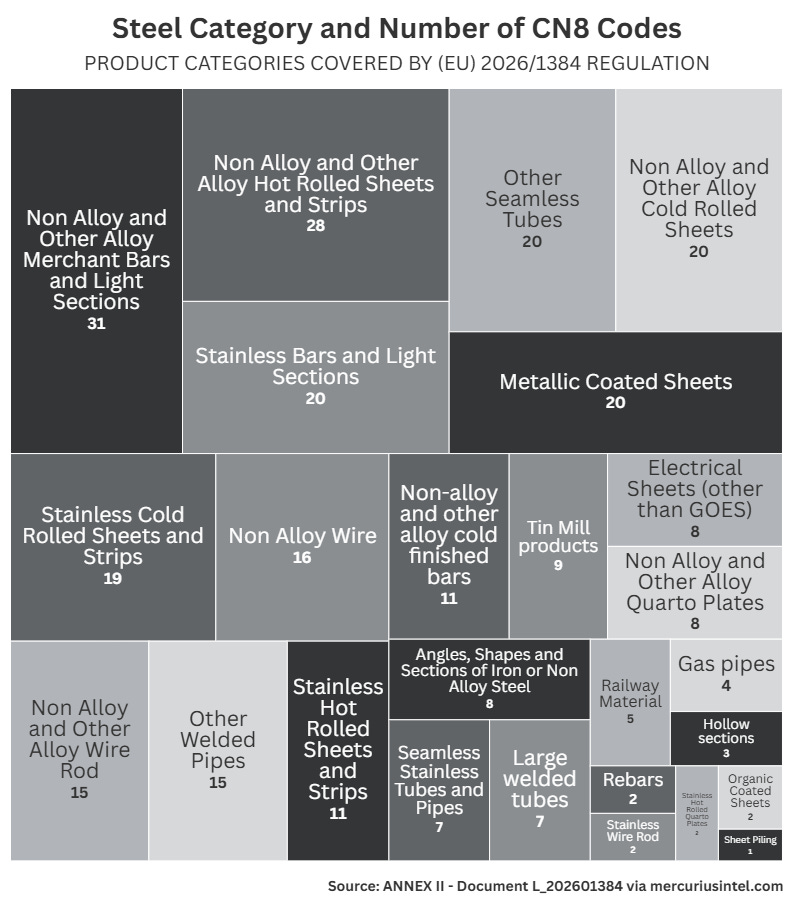
The European Union has introduced Regulation (EU) 2026/1384, a new measure taking effect on July 1, 2026, aimed at protecting the European steel market from the damaging effects of global overcapacity.
The steel sector is a critical pillar of the EU economy, essential for industries like construction, clean technology, and defense. However, a massive, persistent surplus of steel production worldwide—expected to reach 721 million tonnes by 2027—has placed the European industry under severe strain, leading to job losses, financial struggles, and historically low production levels.
Key Features of the New Regulation
To combat these challenges, the EU has established a comprehensive framework that includes:
Tariff Quotas and Duties: The regulation sets annual tariff-free import quotas for various steel product categories. Once these quotas are filled, an out-of-quota duty of 50% will be applied to prevent market flooding and trade diversion.
“Melt and Pour” Transparency: To ensure better oversight of the supply chain, importers will eventually be required to provide evidence—such as a mill test certificate—identifying the “melt and pour” country of origin (where the raw steel was initially produced).
Flexibility and Monitoring: The Commission will manage these quotas on a quarterly basis. During the first year, there is flexibility to carry over unused quotas to ensure stable supply chains, though future adjustments may be made based on market conditions.
Strategic Adaptability: The regulation grants the Commission the power to adjust quota volumes and implement bilateral safeguard measures to respond quickly to market shifts, security needs, or further developments in global overcapacity.
Long-Term Goals
This regulation is part of the EU’s broader commitment to ensuring the viability, resilience, and sustainability of its steel industry, particularly as it undergoes a transition toward carbon-neutral production. The Commission is committed to regular, transparent reporting and will conduct periodic assessments to ensure these measures remain effective and proportionate to the needs of the market.