


The Netherlands saw a solid economic performance in 2025, with Gross Domestic Product (GDP) growing by 1.6 percent. A deeper look at the data from Statistics Netherlands (CBS) reveals a clear trend: exports were the primary engine behind this growth.
Exports: The Main Driver
Exports of goods and services were responsible for 0.9 percentage points of that 1.6 percent growth, meaning they accounted for more than half of the total economic expansion.
What is particularly encouraging is the shift toward high-value activity. Domestic exports—goods actually manufactured within the Netherlands—were the strongest performers, contributing 0.5 percentage points to the growth. There was a notable surge in the exports of machinery, food, and agricultural products produced on Dutch soil.
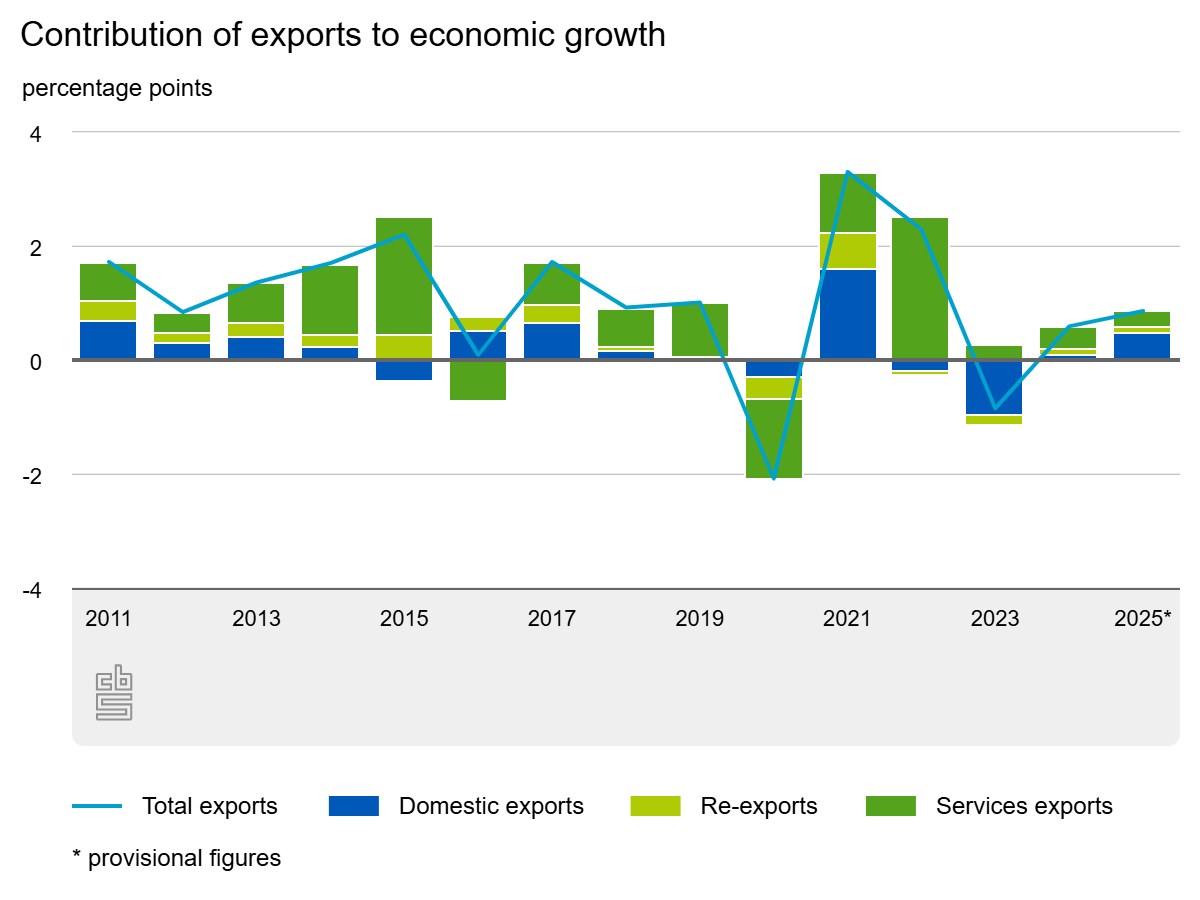
Meanwhile, services exports added 0.3 percentage points, and goods re-exports (items imported and then shipped out with little processing) contributed 0.1 percentage points. This shift toward domestic manufacturing is significant because it typically generates more economic value for the country than simply re-exporting goods.
The Role of Domestic Spending
While exports led the way, domestic spending—which includes household consumption and business investment—contributed the remaining 0.7 percentage points to the growth.
It is worth noting that government expenditure was the largest contributor within this category. While household consumption and business investment also grew, their overall impact on GDP was dampened because a significant portion of those categories involves imported goods, which do not count toward Dutch GDP.
The 2025 figures highlight the continued importance of the Dutch manufacturing and export sector. After a difficult 2023, where a decline in exports led to an economic contraction, the country’s ability to produce and sell high-quality goods—particularly in machinery and agriculture—has proven to be a vital stabilizer and growth accelerator for the national economy.