


The Council of the European Union has officially adopted Regulation (EU) 2026/1181, temporarily eliminating customs duties on essential nitrogen-based fertilisers and their raw components. The emergency measure aims to lower skyrocketing agricultural costs, secure supply chains for European farmers, and safeguard continental food security ahead of the upcoming planting season.
High energy costs and geopolitical tensions have severely strained the EU fertiliser market in recent years. Because natural gas serves as the primary raw material and energy source for nitrogen production, local manufacturers face reduced output and high operational costs. Meanwhile, standard EU import tariffs on these vital goods range from 5.5% to 6.5%, further driving up food prices and squeezing the financial viability of European farms.
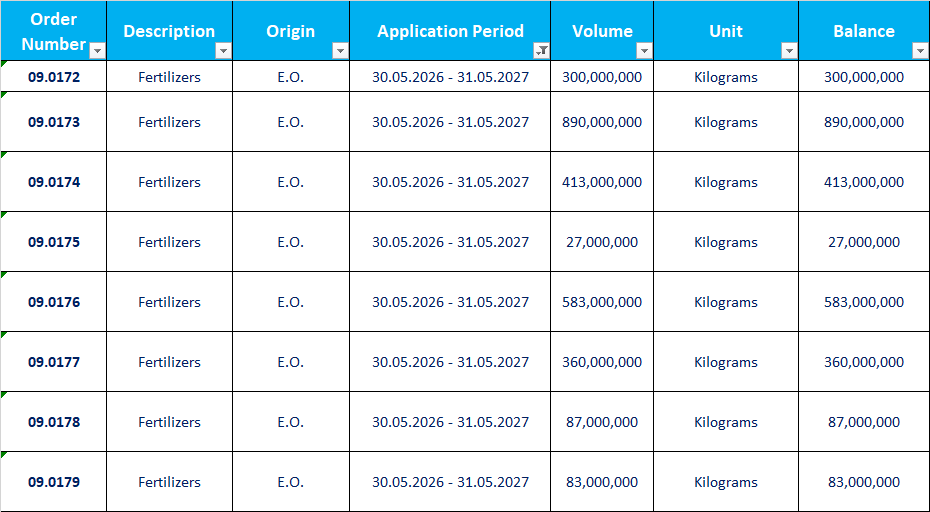
To combat these market pressures, the new regulation opens autonomous tariff quotas for specific chemical components, including urea, ammonia, and various nitrogen mixtures. The duty suspensions will last for exactly one year, expiring on May 31, 2027.
Crucially, the EU is using this policy to aggressively diversify its supply chains away from historical dependencies. The European Commission modeled the quota volumes on 2024 import data, but explicitly excluded any volumes originating from the Russian Federation or the Republic of Belarus.
Consequently, the tax relief strictly bars any direct or indirect imports from Russia and Belarus. This exclusion aligns with broader EU trade sanctions and security exceptions, punishing both nations for their ongoing war of aggression against Ukraine.
The European Commission and member states will jointly manage the import quotas. Moving forward, the Commission will continuously monitor the fertiliser market and reserves the right to extend or modify the suspension if market conditions require further intervention.