

EU Launches Trade Probe Into Chinese Steel Shelving Imports
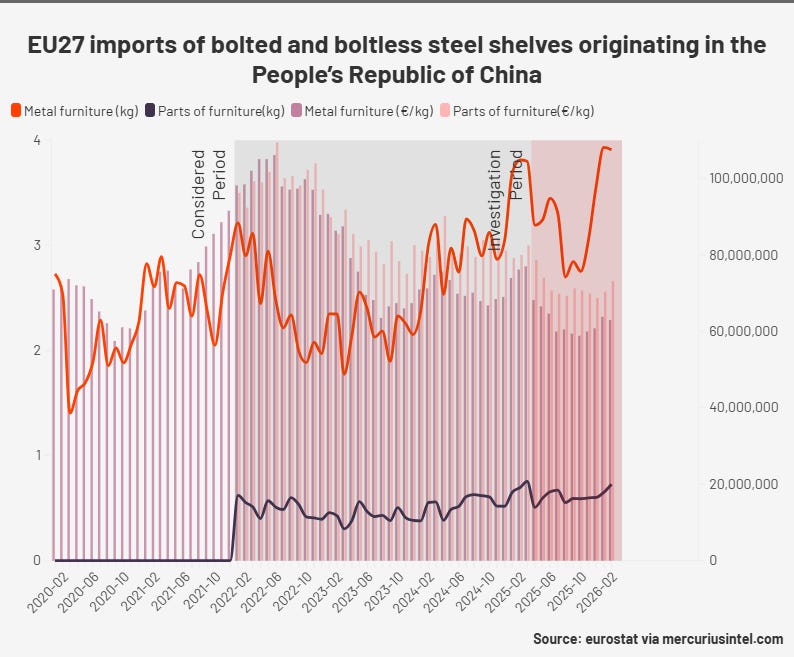
The European Commission has launched an anti-dumping investigation into imports of bolted and boltless steel shelves originating in China. The decision follows a formal complaint lodged on April 27, 2026, by the European Metal Shelving Manufacturers’ Defence Committee, which represents the European Union’s metal shelving industry.
The complaint alleges that Chinese manufacturers are exporting steel shelving units and their components into the EU at unfairly low prices, heavily undercutting local businesses and causing significant economic harm to European factories.
Allegations of State Intervention and Market Distortions
European manufacturers argue that domestic prices and production costs in China are highly distorted due to heavy government intervention. To back up these claims, the complainants pointed to state presence, bankruptcy laws, and deep-seated distortions regarding land, energy, capital, and labor. They specifically highlighted the steel sector, noting that China’s 14th Five-Year Plan directly promotes the steel shelving industry and its upstream suppliers.
Furthermore, the complainant provided evidence of raw material distortions. Hot-dipped galvanized and cold-rolled steel coils make up between 45 percent and 57 percent of production costs for these shelves. The Chinese government currently applies a VAT refund withdrawal on these materials, which keeps domestic prices significantly below international market rates.
Because of these artificial distortions, the European Commission will not use domestic Chinese prices to judge the dumping margins. Instead, investigators will construct a fair market value by comparing costs with a representative country, identifying Indonesia as an appropriate benchmark.
Impact on European Industry
According to the evidence submitted, cheap Chinese imports have steadily increased in both absolute volume and overall market share across the EU. This influx has forced European producers to lower their prices, resulting in lost sales, shrinking market shares, and a severe negative impact on the overall financial performance of the EU industry.