

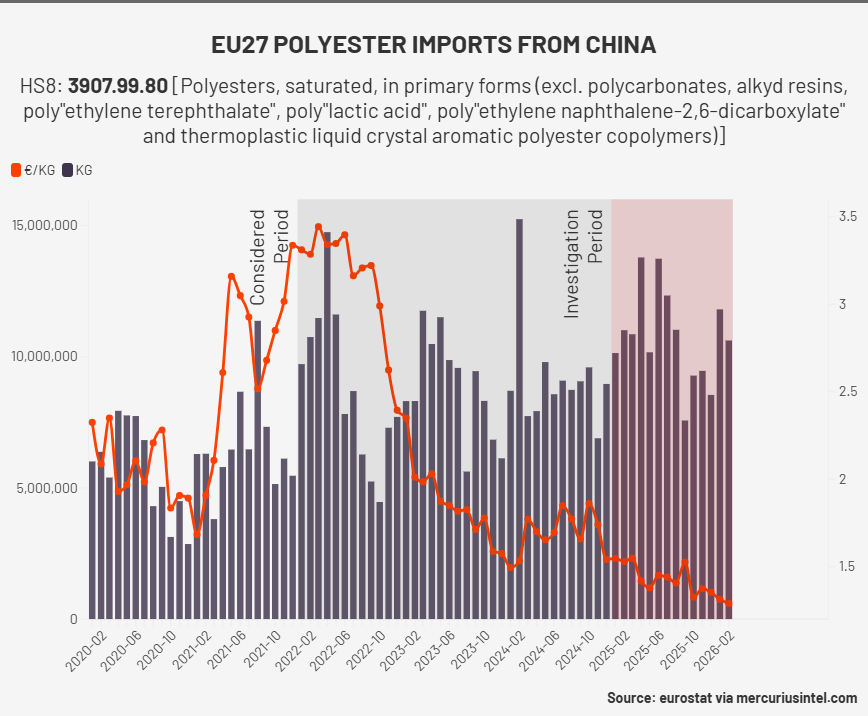
The European Commission launched an anti-dumping investigation into specific plastic imports from China following a formal complaint by chemical giant BASF. The probe targets Chinese imports of certain biodegradable plastics, specifically polybutylene adipate-co-terephthalate (PBAT) and polybutylene sebacate-co-terephthalate (PBSeT).
BASF lodged the complaint on April 20, 2026, on behalf of the European Union’s chemical industry. The company claims that Chinese manufacturers export these raw plastics into the EU at unfairly low prices, heavily undercutting local producers and damaging the European market.
According to BASF, state-driven market distortions in China make domestic prices unreliable for fair comparison. The complaint cites heavy state intervention, state-owned enterprises, and government control over land, energy, capital, and labor. BASF also notes that Beijing’s national Five-Year Plans explicitly target and subsidize the petrochemical sector. Furthermore, recent EU trade probes into Chinese raw materials used to make these plastics already confirmed the presence of major state distortions.
Because of these artificial price distortions, the European Commission will evaluate the fair value of the plastics by comparing export prices against production costs in a neutral market, selecting Brazil as a representative benchmark. The initial evidence indicates significant dumping margins.
The investigation covers pure forms of PBAT and PBSeT, as well as mixtures containing at least 50% of these polymers by weight. Fully finished compounds remain excluded from the scope. Regulators give all interested parties 10 days to submit information regarding the product scope as the formal investigation begins.